
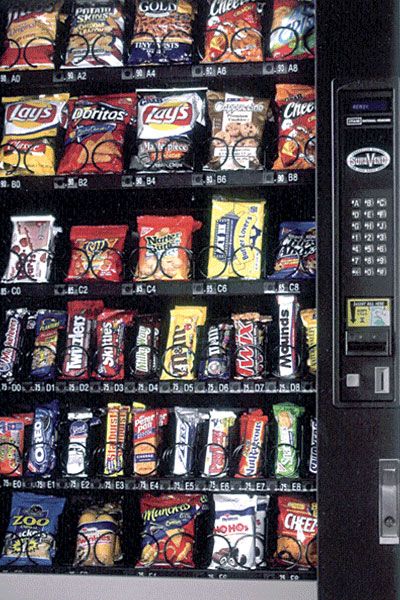
You see them everywhere: in the mall, at work or at school. They've been housing the products of our hearts' desires for decades. Several small parts work together with the main computer to make the vending machine what it is today.
Advertisement
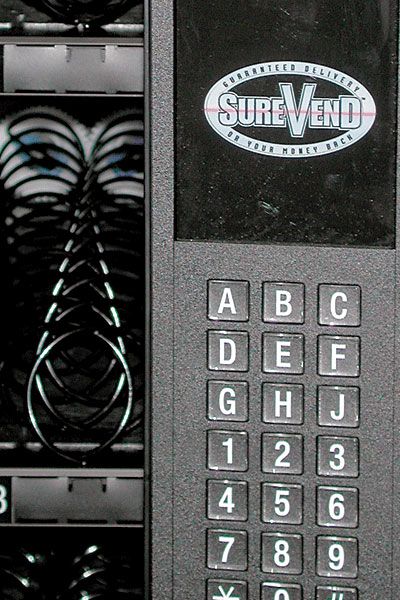
The keypad is not only the vending machine’s main input device but also the home for its central computer. When you press a key combination on the pad, it tells the central computer what it should do next.
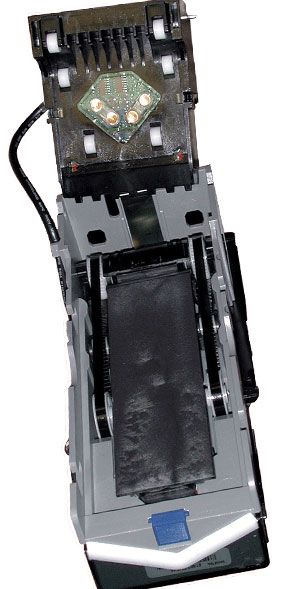
When you use a bill, it goes through a validator. A treadmill-like path pulls your bill into the vending machine and through the optical scanners. Each optical scanner is a small camera that takes pictures of your bill. These pictures are then sent to the main computer, which runs a program looking for specific markers of worth and authenticity.
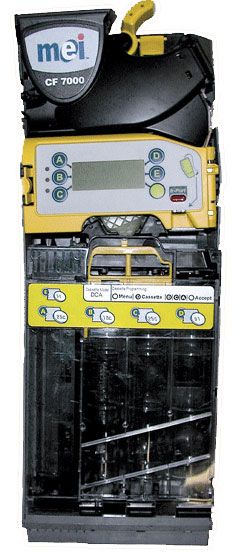
A device like this one determines the type of coins you insert thanks to a series of electromagnets. Different coins affect the electromagnets differently due to their metal composition and thickness. This is how the vending machine figures out if you're using a quarter, dime, nickel, penny or even a plastic coin. Many newer vending machines also allow for purchase through credit card.
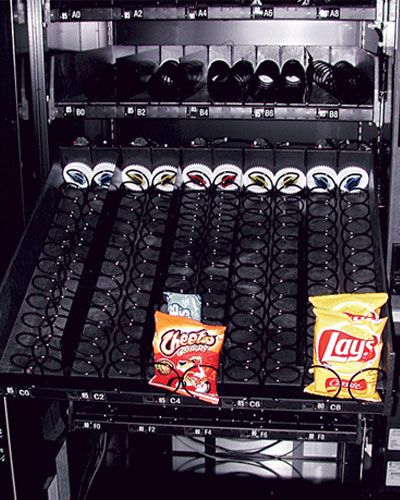
Many vending machines are equipped with metal spirals to hold products in place.Of course, those spirals are easy to observe if you're peering through a machine with a glass front.
Advertisement
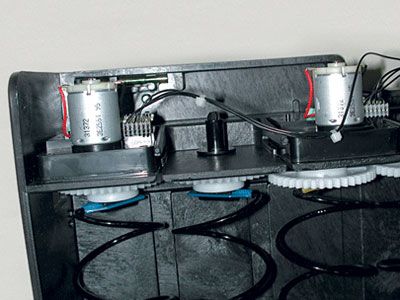
The metal spirals that hold products in place are controlled by a motor, which turns the coils once the main computer has determined you've put in the correct amount of money and your selection has been entered. This allows for your product to drop to the bottom where you can finally retrieve it.
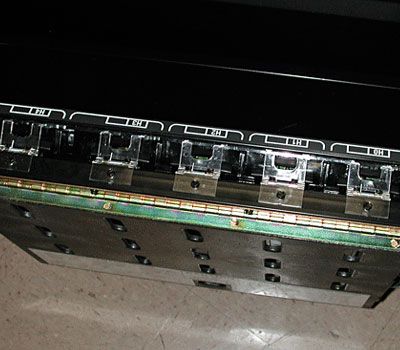
At the bottom of the vending machine, a line of laser beams determines if your product has been released by the metal spirals. Each laser beam is paired with an electronic light sensor. When your product falls it breaks this path, telling the computer that it was a successful transaction.
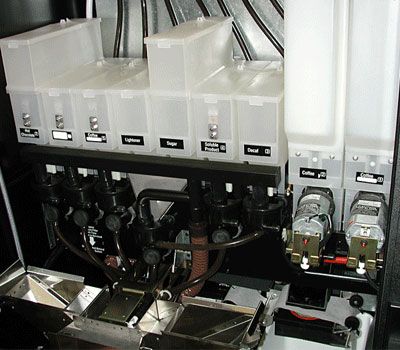
While most use metal spirals, vending machines that dispense beverages like coffee and tea must instead use plastic containers to house their products.
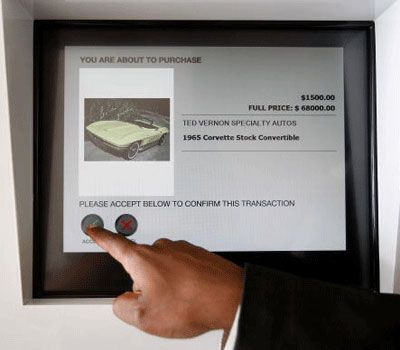
Keeping up with technology, many vending machines are now equipped with touch screen interfaces. This allows for the vending machine to convey much more and different kinds of information.
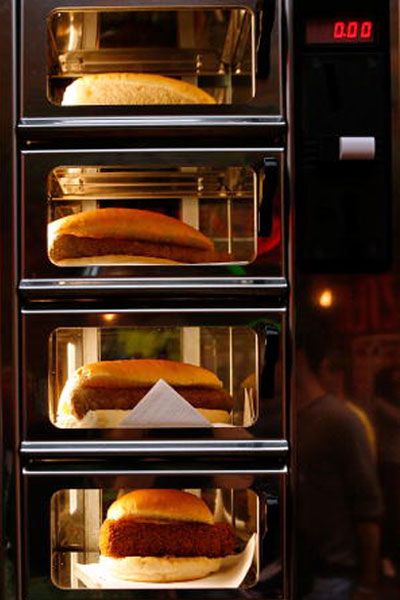
Need more than a small snack to hold you over? No problem. You can also buy hot dogs and hamburgers, as this vending machine in Spain displays. Different countries offer different foods; you can buy ramen similarly in Japan.
Advertisement
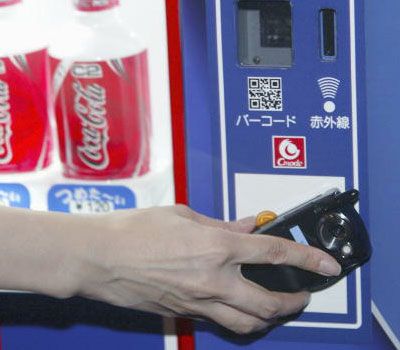
This Japanese vending machine takes these convenient devices a step further; you can pay simply by scanning your mobile phone and directly charging your account.
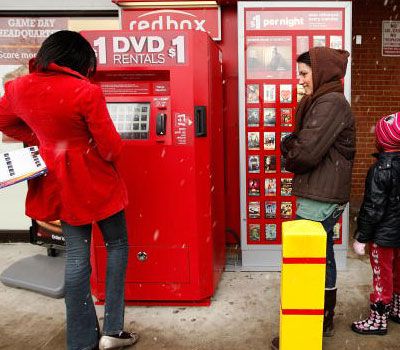
Renting movies at your local grocery store or mall has become more common due to these movie rental vending machines. Unlike traditional vending machines, you must return what you purchase!
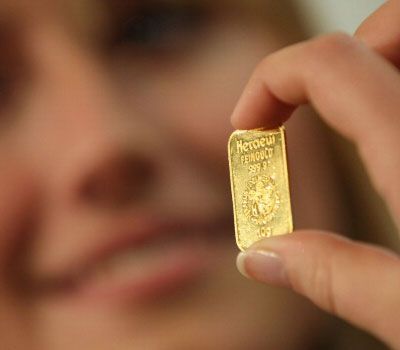
German-made vending machine Gold To Go allows you to purchase gold pieces on the run. More products are available through vending machines today. You may find Apple iPods, jewelry, cigarettes or even groceries. For more information, see 18 Odd Items for Sale in Japanese Vending Machines.