How Submarines Work › Introduction to How Submarines Work
How Submarines Sink & Swim
Breathing, Drinking & Other Things
Dive, Dive, Dive! Life Onboard a Sub
It's Not Science Fiction Anymore
Graph This!
Links


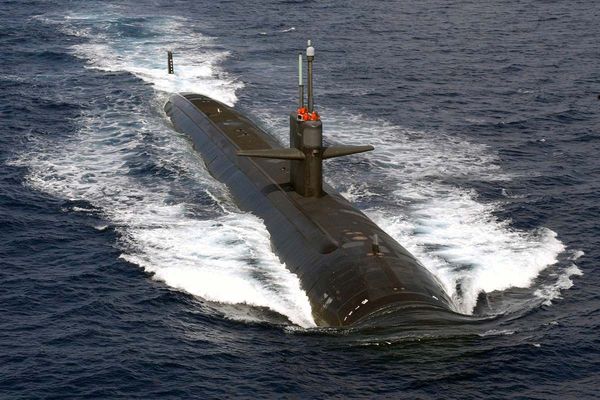
Submarines in today's U.S. Navy are nearly two football fields long and weigh 18,750 tons. That's as heavy as 12,000 cars! How can something that huge float on the surface of the ocean, dive to an exact depth and then float again?


In this edition of HowStuffWorks Express, we’ll learn about the history of submarines, how they dive and surface, how life is maintained underwater and some interesting facts about living onboard.

A ship, submarine or even a bottle with a cork will float when the weight of the water it pushes aside (displaces) is equal to its own weight. When a boat is put in the water, it displaces, or pushes water aside, and creates an upward force. This force is called the buoyant force. It acts opposite to the force of gravity.


The density, or how solid an object is, also affects a ship's ability to float.

Generally, things that are denser than water will sink. However, if the space (volume) inside an object is large enough (like an empty can), it will push enough water molecules out of the way to create an upward force greater than its weight. That's why something as small and dense as a pebble will sink straight to the bottom but an empty tin can that weighs the same amount will float.


Next >>